Seminar Dates: November 4, 2026 2:30 PM
Seminar Cost: $45.00 Register Now
Seminar Description:
Pollinators are essential to healthy ecosystems, productive landscapes, and resilient communities — and they can be supported in nearly any designed environment. This session provides landscape professionals with practical, evidence-based strategies for integrating pollinator habitat into residential, commercial, and municipal projects. 
Participants will explore the ecological and economic value of pollinator gardens, learn how thoughtful plant selection influences habitat success, and gain clear guidance on designing functional bee habitats that support pollinators throughout the year. Emphasis will be placed on urban bee habitat requirements and plant selection in managed landscapes. Attendees will leave with plant selection strategies to immediately enhance biodiversity, increase landscape value, and meet sustainability goals. 
Learning Objectives:
1. Identify design strategies that support pollinator populations in residential, commercial, and municipal landscapes.
2. Evaluate the ecological, economic, and functional benefits of incorporating pollinator gardens into managed landscapes.
3. Select regionally appropriate plant species and design elements that create effective, season-long bee habitat.
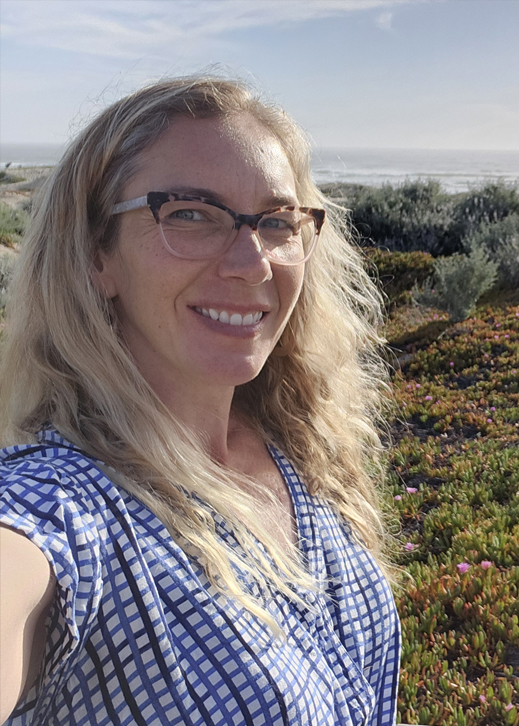
Kim Chacon
Cal Poly, San Luis Obispo
Kim Chacón holds a PhD in Geography from UC Davis (2021), where her research combined field surveys and GIS analysis to examine bee habitat fragmentation and patch dynamics in the UC Davis Arboretum’s themed gardens. Her work demonstrated how designed landscapes can function as vital, novel ecosystems supporting California’s native bee populations.
Bridging research and practice, Kim teaches Landscape Architecture, Horticulture, GIS, and ecological design at Cal Poly San Luis Obispo and Merritt College. She also works with community-based programs to connect landscape design, gardening, and ecological health.
Kim’s work centers on integrating pollinator-supportive plant selection and habitat structure into real-world landscapes. Drawing from both scientific research and practical design strategies, she helps landscape professionals create spaces that are not only beautiful, but also ecologically functional and resilient.
Learn more at beelandscapes.com.